

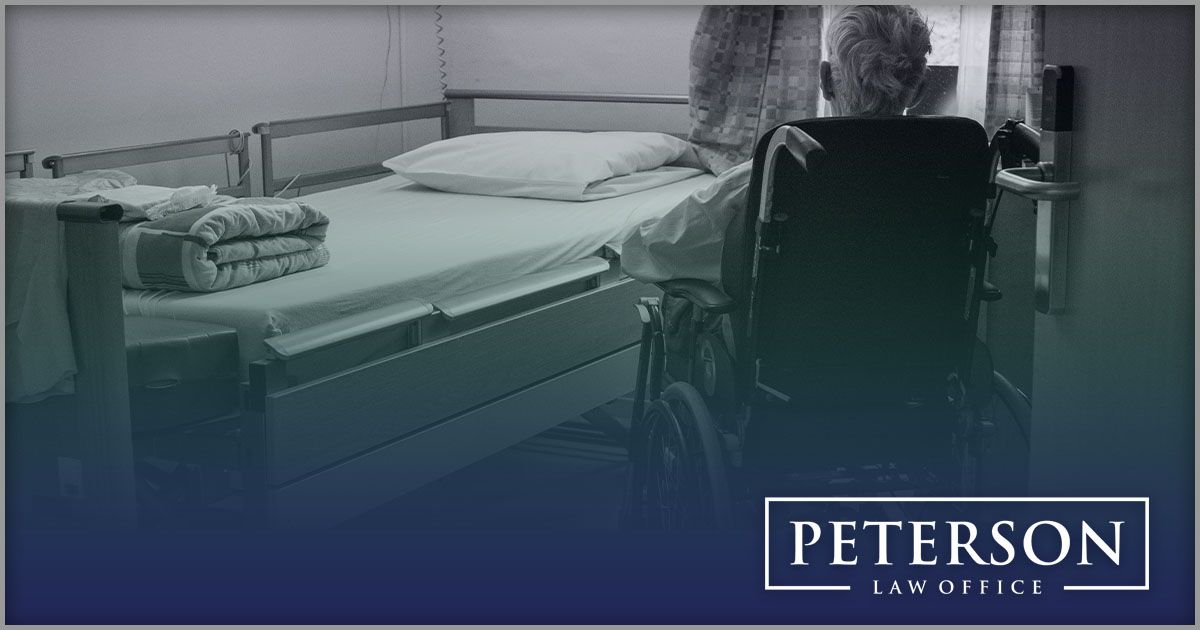
At 2 a.m. in the nursing home, your mother pressed the call button and waited 40 minutes for someone to help her get to the bathroom.
Bad luck? No. That was scheduled.
Not by the aide who eventually came, but by whoever decided how many aides would be covering that hall overnight. Kentucky’s nursing home staffing crisis gets discussed as a labor shortage nobody can fix. For a facility facing a nursing home neglect claim, that framing is worth real money. Bad luck isn’t actionable, but a careless budget decision is.
Here’s what the staffing rules actually require, how thin coverage turns into resident injuries, and what your family can do about it.
The Shortage is Real, the Excuse Isn’t.
Here’s the problem. Long-term care in Kentucky has been squeezed for years and from both directions. There is a genuine shortage of registered nurses and certified nursing assistants. Also, facilities have learned to operate at the bare edge of what’s survivable.
Both things can be true and are true. Hiring is hard, and running a building understaffed is still a choice.
That distinction matters in court. A facility is licensed on the premise that it can safely care for the residents it accepts. When it can’t, the lawful move is to either stop admitting residents or transfer residents somewhere that can safely care for them. Filling all the beds and then hoping nothing bad happens is not the right plan.
So, it’s not a hardship. It’s a business decision that inevitably creates victims.
What Thin Coverage Actually Does to People
Nursing home neglect due to staffing rarely bears the marks of outright cruelty. It just looks like stuff is not getting done.
A resident who needs repositioning every two hours to prevent pressure ulcers instead gets moved every five hours until a bedsore opens over their tailbone. Someone who needs two aides for a safe transfer gets only one, and there’s a fall. Medications stop arriving on schedule. Sometimes they don’t arrive at all, because one nurse is covering a hall built for two or three.
Then there’s what disappears from the record. No time to chart? Skip the charting. No time for sessions? Checkmark it complete anyway, because otherwise it leads to a conversation with a supervisor. Aides cut a corner here and skip a therapy session there until these lapses become too normal.
There are not isolated mistakes by bad employees. Not always, anyway. They’re what happens when bad staffing math meets a call light. They show up in patterns across a facility rather than in one unlucky wing or room.
Nobody Set a Number, and That’s the Problem
Here’s what surprises families: Neither Kentucky nor the federal government requires a specific staff-to-resident ratio.
Federal rules under 42 CFR 483.35 have long required a licensed nurse on duty around the clock, a registered nurse for at least eight consecutive hours a day, and sufficient staff to maintain each resident’s well-being. Kentucky’s own regulations for nursing facilities take the same approach.
They require “enough nursing staff” to meet residents’ assessed needs without specifying a number.
That almost changed. CMS finalized a rule in 2024 setting the first national minimums, including 3.48 total nursing hours per resident per day plus a registered nurse onsite 24 hours a day, seven days a week. However, a federal court in Texas vacated key provisions in April 2025, holding that the 24/7 RN requirement went past what Congress authorized. Congress then blocked enforcement of the 2024 standards until 2034.
So, the operative word “sufficient” survives, even though its lack of specificity undercuts its meaning.
It cuts both ways. There’s no bright line a facility can point to and claim compliance, which means the evidence decides the issue. Staffing sheets, payroll records, agency invoices, call-light response logs, and CMS Care Compare data all speak to whether coverage matched the residents in the building.
“We Were Short-Staffed” Is Not a Defense
Facilities claim this all the time, often with real feeling. It’s still not a legal defense.
Kentucky recognizes corporate negligence in healthcare, which reaches well past an aide who missed the turn schedule to the company that decided how many aides to hire. Budget directives, census targets, and staffing decisions made at the corporate level are all fair game.
In a nursing home understaffing lawsuit, they’re often where the case is won or lost.
Facilities are also liable for their employees’ negligence under ordinary agency principles. Both theories can run at the same time.
One key warning, though: Kentucky gives you one year to file most personal injury claims.
The Bluegrass State has one of the shortest deadlines in the country. Some claims built on statutory resident-rights violations could fall under a longer period, but that’s a determination best made early on. In fact, it’s best to consult an attorney rather than placing a bet on your own timing.
When building a case, start with the facility’s records. Request the care plan, the incident reports, and the facility’s staffing documentation in writing.
Also, keep your own log of what you’ve observed and when.
Peterson Law Office Looks at the Staffing Sheet
A facility that admits more residents than it can provide for has made a decision. Decisions leave a paper trail. What happened to your loved one probably wasn’t one careless aide on one bad shift. It was a pattern somebody decided they could live with.
Peterson Law Office represents families across Lexington and Central Kentucky in long-term care negligence cases. Our attorneys know how to get staffing records out of facilities that would rather discuss the labor market. We investigate whether what you witnessed was an incident or a pattern.
If your loved one was hurt in a facility that never seemed to have enough staff on the floor, speak with one of our attorneys soon.
That one-year clock is unforgiving.